
New Exhibition: FAKE NEWS?
Explore misinformation, disinformation and propaganda from ancient times to the present day.

Most of us pride ourselves on our independent thinking. However, we all rely on information we receive from multiple sources. Our thoughts and opinions are shaped by friends and family, the news, social media, books and magazines, experts and celebrities. In this complex world of information, how do we begin to separate fact from fiction and truth from lies?

About the Exhibit
In our first exhibition, step back in time and discover how information has been manipulated and presented through the ages in order to win our hearts and minds.
Our second exhibition explores the impact of the digital age and the many ways that individuals use the internet to consume information – both true and false.

FAKE NEWSFLASH TRAIL
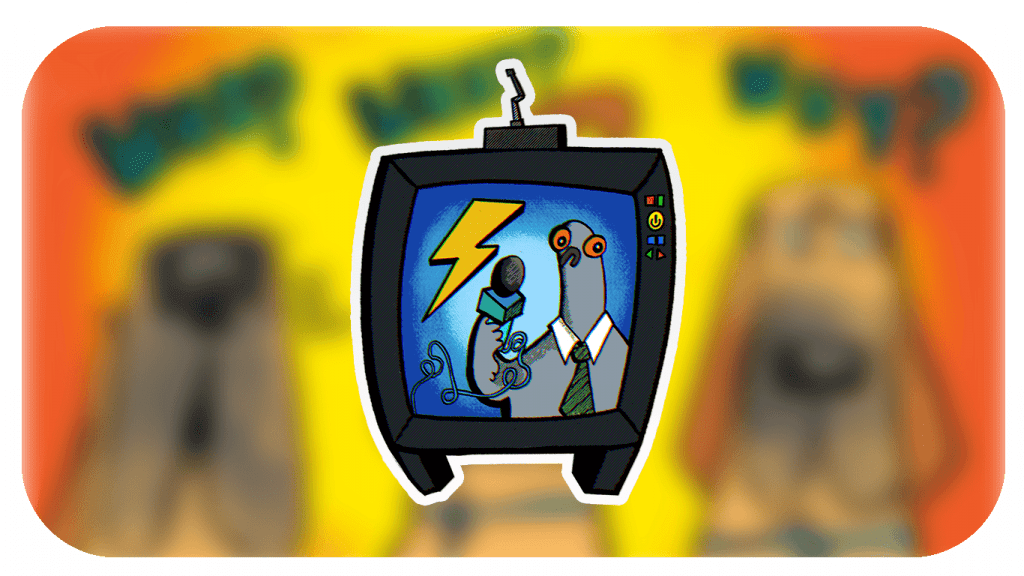
Be recruited by Earnest Smellingway, our trusty bloodhound with a nose for fake news! He’s discovered that a flock of messenger pigeons has escaped into the museum — and some have gone rogue, spreading misleading stories.
Your mission is to track them down, investigate the messages they’re sharing, and decide what’s real and what’s fake. With Earnest by your side, can you sniff out the truth before it’s too late?
What will you believe…? 🕵️♂️🐦
COLLECT YOURS FROM THE FRONT DESK



Further Reading 📖
- Robertson, C.E., del Rosario, K.S. and Van Bavel, J.J. (2024) “Inside the funhouse mirror factory: How social media distorts perceptions of norms,” Current Opinion in Psychology, 60, p. 101918. Available at: https://doi.org/10.1016/j.copsyc.2024.101918
- Severin, K. (2019) The Post-Peak Attention Economy What’s Next for Entertainment?, MIDiA Research. Available at: https://www.midiaresearch.com/reports/the-post-peak-attention-economy (Accessed: February 10, 2026).
- Webster, J.G. (2016) The Marketplace of Attention: How Audiences Take Shape in a Digital Age. MIT Press. Pp.4.
- Global fact checking network (no date) Spreading disinformation across game ecosystems: from in-game events to metaverses. Available at: https://globalfactchecking.com/learning_articles/spreading-disinformation-across-game-ecosystems-from-in-game-events-to-metaverses/ (Accessed: February 10, 2026).
- Giuffrida, A. (2026) Alex Honnold free solos Taipei 101 skyscraper in live Netflix climb | Sport | The Guardian. Available at: https://www.theguardian.com/sport/2026/jan/24/alex-honnold-free-solo-taipei-101-netflix (Accessed: February 10, 2026).
- Smith, A. (2020) YouTube users shown fake US election results, The Independent. Available at: https://www.independent.co.uk/tech/youtube-election-results-fake-livestream-b1585888.html (Accessed: February 10, 2026).
- Zeng, J., Schäfer, M.S. and Oliveira, T.M. (2022) “Conspiracy theories in digital environments: Moving the research field forward,” Convergence (London, England), 28(4), pp. 929–939. Available at: https://doi.org/10.1177/13548565221117474.
- Educate Against Hate (no date) “The Manosphere.” HM Government. Available at: https://www.educateagainsthate.com/wp-content/uploads/2025/11/Manosphere-V1.2-1.pdf.
- Halpin, M. et al. (2025) “When Help Is Harm: Health, Lookism and Self‐Improvement in the Manosphere,” Sociology of Health & Illness, 47(3), p. e70015. Available at: https://doi.org/10.1111/1467-9566.70015.
- UN Women (2025) What is the manosphere and why should we care?, UN Women – Headquarters. Available at: https://www.unwomen.org/en/articles/explainer/what-is-the-manosphere-and-why-should-we-care (Accessed: February 10, 2026).
- Ofcom (2023) Gen Z driving early adoption of Gen AI, our latest research shows, www.ofcom.org.uk. Available at: https://www.ofcom.org.uk/internet-based-services/technology/gen-z-driving-early-adoption-of-gen-ai (Accessed: February 10, 2026).
- European parliament (2025) “Children and deepfakes.” Available at: https://www.europarl.europa.eu/RegData/etudes/BRIE/2025/775855/EPRS_BRI(2025)775855_EN.pdf.
- Wei, M. (no date) How AI Could Shape Our Relationships and Social Interactions | Psychology Today. Available at: https://www.psychologytoday.com/us/blog/urban-survival/202502/how-ai-could-shape-our-relationships-and-social-interactions (Accessed: February 10, 2026).
- Babu, J. et al. (2025) “Emotional AI and the rise of pseudo-intimacy: are we trading authenticity for algorithmic affection?,” Frontiers in Psychology, 16, p. 1679324. Available at: https://doi.org/10.3389/fpsyg.2025.1679324.
Fake News? Is commissioned by Ofcom, the UK’s communications regulator, as part of their Making Sense of Media programme.
The exhibition and interactive museum trail run until mid-2027.
Plan Your Visit
Explore our opening times, admission information, visitor guides, how to find us and more!
